
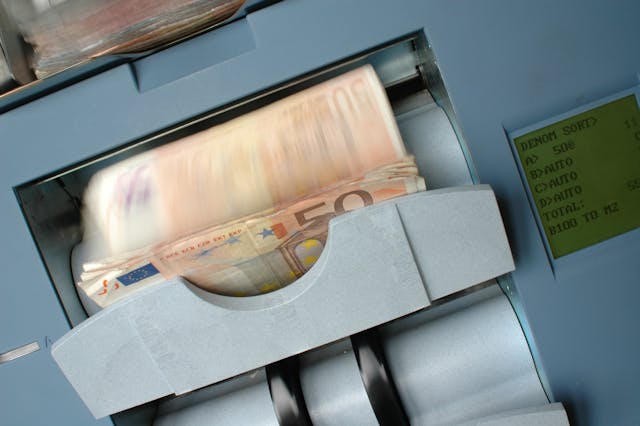
Anyone who has ever counted a till at the end of a busy trading day knows the problem. You have a stack of notes — a jumbled mix of $5s, $10s, $20s, $50s, and $100s — and before you can get a total, you have to sort them by denomination first. That sorting step alone can add 10 to 15 minutes to an already slow process.
A mixed denomination money counter eliminates that step entirely. You feed in the unsorted stack and the machine identifies, counts, and totals every denomination automatically — giving you a complete breakdown in seconds. No pre-sorting, no manual grouping, no separate passes for each denomination.
This guide explains exactly how the technology works, what separates a reliable mixed denomination counter from a basic one, and which machines from Cashcom’s Australian range are best suited for businesses that count unsorted cash every day.
| 💡 Key distinction: Not all money counters handle mixed denominations. A basic note counter counts the quantity of notes and tells you how many you have — but it cannot identify denominations or give you a total value from unsorted notes. Mixed denomination counting (also called mixed value counting or auto denomination recognition) is a specific capability that requires image processing technology. Only machines with this feature can give you a value total from an unsorted stack. |
What Is a Mixed Denomination Money Counter?
A mixed denomination money counter is a banknote processing machine that can automatically identify and count notes of different values in a single unsorted pass. Rather than requiring you to group your $5s separately from your $10s, $20s, $50s, and $100s, you load the entire mixed stack and the machine does the identification work itself.
The result is a complete denomination breakdown — how many of each note value — along with the total cash value. For a business with a day’s mixed takings to reconcile, this is the difference between a 2-minute task and a 20-minute one.
Mixed Denomination Counting vs Standard Counting
| Feature | Standard Counter |
| Counts quantity of notes | Yes |
| Identifies denominations | No — requires pre-sorted notes |
| Gives total cash value | Only if pre-sorted by denom |
| Unsorted stack input | Counts pieces only, not value |
| Denomination breakdown | No |
| Time to count $3,000 mixed | 20+ min (manual sort first) |
| Time to count $3,000 mixed | Under 2 min (mixed denom counter) |
The time difference compounds significantly in a multi-till business. Three tills, each with $1,000–$2,000 in mixed notes, counted by hand after pre-sorting: 45–60 minutes of staff time. The same counts on a mixed denomination machine: under 10 minutes total.

How Does Mixed Denomination Recognition Actually Work?
This is where machines separate themselves from each other. The underlying technology determines both accuracy and speed of denomination recognition — and understanding it helps you choose the right machine for your situation.
CIS — Colour Image Sensor (The Gold Standard)
The most accurate and reliable method. A CIS (Colour Image Sensor) captures a full-colour image of both sides of each note as it passes through the machine — at high speed, typically in under 30 milliseconds per note. The captured image is instantly compared against a reference database of known genuine notes for every denomination.
The machine identifies the denomination from the image (by reading denomination text, colour patterns, and security features), increments the count for that denomination, adds the value to the running total, and passes the note to the output stack — all before the next note enters the scanner.
Dual CIS — used in machines like the Cashcom H110 and LS-200 — scans both sides of the note simultaneously, doubling the data captured per pass and significantly improving recognition accuracy, particularly for worn or slightly damaged notes.
MG — Magnetic Ink Detection
Genuine banknotes are printed with magnetic ink in specific patterns unique to each denomination. Magnetic sensors read these patterns during transit. While magnetic detection alone cannot reliably identify denominations across all currencies, combined with CIS imaging it adds a strong secondary confirmation layer — particularly useful for distinguishing denominations that share similar visual characteristics.
IR — Infrared Detection
Infrared sensors measure how notes absorb and reflect IR light. Different denominations and different security inks have distinct infrared signatures. IR detection is highly reliable for both denomination identification and counterfeit detection, as counterfeit notes typically fail to replicate the correct IR absorption profile of genuine polymer notes.
OCR — Optical Character Recognition
Some higher-end machines go a step further than image comparison — they use OCR to actually read the denomination numeral printed on the note in real time. This is the same technology used in serial number logging (reading the unique serial number string off each note), and it adds an additional confirmation layer to denomination identification beyond pure image matching.
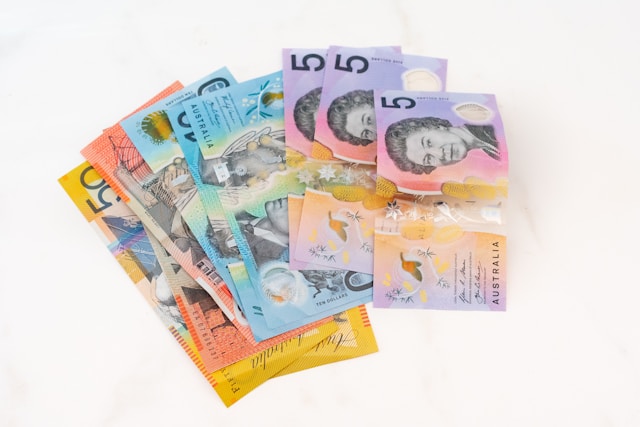
| 🇦🇺 Australian polymer notes: Australian banknotes are printed on polymer substrate (not paper) by Note Printing Australia. Polymer notes have distinct CIS, IR, and MG signatures that differ significantly from paper currencies. Machines configured for AUD denomination recognition are calibrated specifically against Australian polymer note profiles — which is why using a machine verified for AUD rather than a generic multi-currency unit matters for accuracy. |
What Happens During a Mixed Denomination Count: Step by Step
Here is what actually happens inside a mixed denomination counter during a count — using a real-world retail example of $2,340 in mixed notes:
- You load an unsorted stack of, say, 150 mixed notes into the hopper — $5s, $10s, $20s, $50s, and $100s in no particular order.
- The machine’s feeder picks up notes one at a time at high speed (720–1,500 notes/min depending on model) and passes each through the sensor array.
- For each note, the CIS captures a full colour image of both faces simultaneously. The MG sensor reads the magnetic ink pattern. The IR sensor checks the infrared signature.
- The processor cross-references all three data streams against its denomination reference database and identifies the denomination — e.g. ‘$50’ — in under 30 milliseconds.
- The count for that denomination increments by one. The value ($50) is added to the running total. The note is routed to the appropriate output pocket.
- If a note fails denomination verification — wrong magnetic pattern, failed IR signature, unrecognised image — it is diverted to the reject pocket and flagged on the display.
- When all 150 notes are processed (taking approximately 10–20 seconds on a 900–1,500 notes/min machine), the display shows the full breakdown: $5 × 12 = $60 | $10 × 18 = $180 | $20 × 43 = $860 | $50 × 22 = $1,100 | $100 × 14 = $1,400 | Total: $3,600.
- You have your total and your denomination breakdown, with any suspect notes already separated in the reject pocket — ready for a second check.
| ⏱️ Real-world time comparison: The same 150-note mixed stack, counted manually after pre-sorting by denomination, takes an average of 12–18 minutes for a careful counter. The same count on a Cashcom H110 or H210 takes under 15 seconds. Across five tills over a working week, that’s several hours of staff time recovered every week. |
What to Look for in a Mixed Denomination Counter
Auto Recognition Currency Range
Most machines can be configured to recognise multiple currencies. For Australian businesses, the most important confirmation is AUD auto-recognition. If you also handle foreign currency — tourism retail, hospitality near international hubs, duty-free — look for a machine with multi-currency auto-recognition covering the currencies you deal with most.
Detection Depth: Single vs Multi-Method
A machine using only UV for denomination recognition is less reliable than one using UV + MG + IR + CIS. The combination matters because no single method is infallible. UV can be replicated; MG patterns are harder; IR signatures harder still; full CIS imaging combined with all three is the current standard for reliable mixed denomination recognition. Machines with Dual CIS — scanning both note faces simultaneously — are the most accurate.
Counting Speed
Mixed denomination counting is slightly slower than piece-count mode on the same machine, because each note requires image processing and cross-referencing. On the LS-200, for example, piece-count speed is 1,500 notes/min but value/authentication speed is 1,200 notes/min. This is normal and still enormously faster than any manual process. For a single-till business, 720 notes/min in value mode is more than adequate. For multi-till operations, 1,000–1,200 notes/min makes a practical difference.
Reject Pocket Handling
A well-designed machine routes denomination-unrecognised notes to a separate reject pocket automatically. This is critical: you don’t want suspect notes mixed back into your counted stack. Check that the reject pocket capacity is adequate for your volume — a 100-note reject pocket is standard, but if you frequently process large batches of worn or mixed-condition notes, a larger reject capacity reduces mid-count interruptions.
Display Detail — Denomination Breakdown vs Total Only
This is a commonly overlooked specification. Some machines show only a total value. Others show a full denomination breakdown — how many of each value — alongside the total. For retail float management and banking preparation, the denomination breakdown is the more useful output. Always confirm a machine shows per-denomination counts, not just a grand total.
Serial Number Logging
Higher-end machines log the serial number of every note processed. This matters for accountability and fraud investigation — if a counterfeit or disputed note turns up later, your machine’s log shows exactly when it was counted and in which batch. For businesses handling large cash volumes, serial number logging is an important feature that adds minimal processing overhead.
Best Mixed Denomination Money Counters from Cashcom
Every machine in the Cashcom range supports mixed value counting with auto denomination recognition. Here is how they compare, from best entry-level option through to the most advanced professional unit.
Best Entry Point: Reliable Mixed Value Counting for Small Business
| H110 Cash Counting Machine 🏪 Best for: Small–medium business, 1–2 tills
The H110 brings Dual CIS image processing — the same core technology used in banking equipment — to small business use. At 720 notes/min, it processes a 500-note stack in under 45 seconds. The mixed value counting capability automatically identifies AUD denominations from an unsorted stack and displays both the denomination breakdown and total value. Fitness detection runs simultaneously — damaged or suspect notes are routed to the reject pocket without interrupting the count. Mixed Value Counting: Auto currency recognition — USD, EUR and more, fully configurable for AUD Counting Speed: 720 notes/min (typical) Detection Method: Dual CIS (Colour Image Sensing) — bank-grade accuracy Fitness Detection: Soil, tape, graffiti, stain, hole, tear, watermark, dog-ear, double notes Hopper Capacity: 500 notes Stacker Capacity: 200 notes Reject Pocket: 100 notes Serial Number Logging: Yes — capture, data analysis, statistical reports Connectivity: 2× USB, 1× serial port, 1× LAN port Compliance: CE, CB, FCC certified Optional: External printer, user display Best Use Case: Daily end-of-day till count for small retail, café, hospitality
View product → https://www.cashcom.com.au/product/h110-cash-counting-machine/ |
Best Sorter + Mixed Value Counter: Denomination Separation in One Pass
| H210 Money Counter and Sorter Machine 🔄 Best for: Businesses needing sorting + mixed value counting
The H210 is the step up from pure counting into simultaneous sorting. Where the H110 gives you a denomination breakdown on screen, the H210 physically routes notes into separate pockets by denomination as it counts — so you end the count with $5s in one pocket, $20s in another, and so on, plus the complete value breakdown on screen. For businesses that prepare denomination-specific banking bundles or manage multiple float denominations, this eliminates an entire manual sorting step. Mixed Value Counting: Auto denomination recognition — sorts and counts simultaneously Counting Speed: 900 notes/min Sorting Speed: 750 notes/min — denomination, face, orientation, damage Structure: Vertical — 1 entry, 2 sorted exits + 1 rejection outlet Hopper Capacity: 500 notes Stacker/Exit Capacity: 200 notes per pocket Reject Pocket: 100 notes Damage Detection: Dirt, hole, dog-ear, adhesive tape, crack, dimension, shortage, double notes Serial Numbers: Real-time identification — queryable by serial, time, operator, batch Counterfeit Detection: Double-face counterfeit identification Best Use Case: Retail reconciliation requiring denomination totals AND physical sorting
View product → https://www.cashcom.com.au/product/h210/ |
Best High-Speed Mixed Value Counter: Multi-Till Operations
| LS-200 Note Counter Machine ⚡ Best for: High-volume, multi-till, 1,200+ notes/min value counting
The LS-200 runs mixed value counting at 1,200 notes/min — compared to the H110’s 720 and the H210’s 900, this is a meaningful speed advantage for businesses counting three or more tills daily. The 18-channel magnetic sensor and 21-channel ultrasonic system (F version) represent bank-grade detection depth. LAN connectivity lets count data feed directly to networked reporting systems, which matters for multi-location operations wanting consolidated daily cash reports. Mixed Value Counting: Auto Recognition — up to 20 currencies simultaneously Counting Speed: 1,500 notes/min (piece count) Value Count Speed: 1,200 notes/min (value + authentication) Serial Number Speed: 1,200 notes/min (real-time OCR) Sensor System: Dual CIS + UV + MG 18-channel + IR + Ultrasonic 21-channel (F ver) Hopper Capacity: 600 notes Stacker Capacity: 200 notes Reject Pocket: 100 notes Sorting: Denomination, face, orientation — real-time Operating System: Linux — stable for continuous daily operation Connectivity: RS-232, USB, LAN Display: 4.3-inch wide touch screen Best Use Case: Multi-till retail, financial institutions, high daily cash volumes
View product → https://www.cashcom.com.au/product/ls-200-note-counter/ |
Best Premium Mixed Value Counter: All-Day Professional Operation
| LS-300 Note Counter Machine 🏆 Best for: Banks, large retail, continuous all-day operation
The LS-300 combines everything — 1,200 notes/min mixed value counting, full Dual CIS + 18-channel MG + IR + ultrasonic detection, fitness sorting, real-time serial number OCR, and a dust-free vertical path designed for continuous all-day operation. Remote upgrade capability keeps denomination databases current without a service visit. For any operation where the machine runs for hours each day and downtime is not acceptable, the LS-300 is built for it. Mixed Value Counting: Auto Recognition — up to 20 currencies, denomination/face/orientation sort Value Count Speed: 1,200 notes/min (value + authentication) Serial OCR Speed: 1,000 notes/min — real-time TITO and clearance Sensor System: Dual CIS + UV + MG 18-channel + IR + Ultrasonic 21-channel Multi-Currency: Up to 48 currencies supported Sorting: Full denomination, face, orientation, fitness sorting Connectivity: LAN, USB, RS-232 — remote upgrade + real-time monitoring Display: 4.3-inch touch screen + stacker side LED display Special Feature: Dust-free vertical path — jam-resistant for all-day continuous use Best Use Case: Banks, large-format retail, professional cash processing centres
View product → https://www.cashcom.com.au/product/ls-300-note-counter/ |
Side-by-Side: Mixed Denomination Feature Comparison
| Feature | H110 | H210 | LS-200 | LS-300 |
| Mixed Value Counting | ✅ | ✅ | ✅ | ✅ |
| Auto Denomination ID | Auto | Auto | Auto | Auto |
| Denomination Breakdown | ✅ | ✅ | ✅ | ✅ |
| Physical Denomination Sort | ❌ | ✅ | ✅ | ✅ |
| Dual CIS Imaging | ✅ | ✅ | ✅ | ✅ |
| Magnetic Detection | ✅ | ✅ | ✅ (18ch) | ✅ (18ch) |
| IR Detection | ✅ | ✅ | ✅ | ✅ |
| UV Detection | ✅ | ✅ | ✅ | ✅ |
| Serial Number Logging | ✅ | ✅ | ✅ | ✅ |
| Fitness Sorting | ✅ | ✅ | ✅ (F ver) | ✅ |
| Value Count Speed | 720/min | 900/min | 1,200/min | 1,200/min |
| Hopper Capacity | 500 notes | 500 notes | 600 notes | N/A |
| LAN Connectivity | ✅ | ❌ | ✅ | ✅ |
| Touch Screen | ❌ | ❌ | ✅ | ✅ |
| All-Day Operation | ✅ | ✅ | ✅ | ✅ |
Which Businesses Need a Mixed Denomination Counter Most?
Mixed denomination counting delivers the biggest time saving for businesses with these characteristics:
High Transaction Volume, Multiple Denominations
Cafés, restaurants, quick service retail, and convenience stores process hundreds of cash transactions daily. Every transaction involves different denomination combinations. End-of-day, the till contains a completely unsorted mix. Pre-sorting before counting is a bottleneck that a mixed denomination counter eliminates entirely.
Multiple Tills or Service Points
Each till generates its own unsorted denomination mix. A business with four tills doing manual pre-sorting before counting spends four times as long. A mixed denomination counter multiplies its time saving with each additional till — the ROI is directly proportional to the number of tills.
Staff Turnover Environments
In hospitality and retail, cash counting is often performed by different staff members across shifts. Manual pre-sorting is prone to errors when staff are unfamiliar, rushed, or fatigued. A mixed denomination counter removes the sorting step and the associated errors entirely — anyone can operate it correctly with minimal training.
Banking Preparation
Businesses that prepare denomination-specific banking bundles — separating $50s and $100s for one envelope, $20s for another — benefit from machines that provide per-denomination counts automatically. The H210, LS-200, and LS-300 go further by physically sorting notes into separate pockets by denomination during the count, removing even the physical separation step.
Counterfeit-Risk Environments
Tourism precincts, entertainment venues, markets, and any high-cash-turnover business are at above-average counterfeit risk. A mixed denomination counter with multi-method detection (UV + MG + IR + CIS) catches counterfeits during the counting process — providing both protection and a documented record through serial number logging.
Frequently Asked Questions
| Q: What is a mixed denomination money counter?
A mixed denomination money counter is a banknote processing machine that automatically identifies and counts notes of different values in a single unsorted pass. Unlike a basic note counter that only tallies quantity, a mixed denomination counter uses image processing (CIS), magnetic, and infrared detection to recognise each note’s value — delivering a full denomination breakdown and total cash value without any pre-sorting required. |
| Q: How accurate is mixed denomination counting?
Professional machines using Dual CIS imaging combined with magnetic and infrared detection — like the Cashcom H110, H210, LS-200, and LS-300 — are highly accurate under normal conditions. Errors typically occur with severely damaged notes, foreign notes not in the machine’s currency database, or notes with significant moisture or contamination. These are routed to the reject pocket automatically rather than miscounted. |
| Q: Can a mixed denomination counter handle Australian polymer notes?
Yes — when configured for AUD. All Cashcom machines are set up for Australian currency. Australian polymer banknotes have specific CIS, IR, and MG profiles that differ from paper currencies. A machine configured for AUD is calibrated against these polymer note characteristics specifically, which is why using an Australia-specific supplier like Cashcom matters rather than buying an unconfigured unit online. |
| Q: What is the difference between mixed denomination counting and denomination sorting?
Mixed denomination counting identifies each note’s value and provides a denomination breakdown — but all notes end up in a single output stack. Denomination sorting goes further: the machine physically routes notes into separate output pockets by denomination as it counts. Machines like the H210, LS-200, and LS-300 do both simultaneously — you get the count breakdown AND physically sorted note piles in a single pass. |
| Q: How fast is a mixed denomination counter compared to manual counting?
Significantly faster. Manual counting of a mixed denomination stack requires pre-sorting first — typically 10–20 minutes for a $2,000–$3,000 mixed stack — then counting each denomination pile separately. A machine like the Cashcom H210 processes the same unsorted stack in under 35 seconds at 900 notes/min. The LS-200 at 1,200 notes/min value counting is even faster. Across multiple tills over a working week, this saves several hours of staff time. |
| Q: Do mixed denomination counters also detect counterfeits?
Yes — all Cashcom mixed denomination counters combine denomination recognition with counterfeit detection. The same UV, magnetic, IR, and CIS sensors used to identify denomination are also used to verify note authenticity simultaneously. A note that passes denomination recognition but fails authentication checks is still routed to the reject pocket. You don’t need to run a separate counterfeit detection pass. |
| Q: What is the best mixed denomination money counter for a small business in Australia?
For most small Australian businesses, the Cashcom H110 is the best starting point — Dual CIS detection, 720 notes/min, mixed value counting with AUD auto-recognition, and a compact footprint. For businesses that also need denomination sorting (physical separation into denomination piles), the H210 is the recommended step up. Call Cashcom on 0451 353 676 for a direct recommendation based on your daily volume. |
| Q: Where can I buy a mixed denomination money counter in Australia?
Cashcom supplies mixed denomination money counters to businesses Australia-wide from our Sydney base at 181 Parramatta Rd, Haberfield NSW 2045. We ship to all states and territories. Browse the range at cashcom.com.au/products, call 0451 353 676, or email sales@cashcom.com.au. Available Monday to Friday, 9am–6pm. |
Mixed denomination counting is the single feature that most transforms daily cash reconciliation for businesses with busy, mixed-transaction tills. The pre-sorting step it eliminates is slow, error-prone, and a poor use of staff time at the end of every trading day.
For most Australian businesses, the H110 provides everything needed in a compact, bank-grade format — Dual CIS imaging, auto AUD denomination recognition, full counterfeit detection, and 720 notes/min. The H210 is the natural step up for any business that also needs denomination-sorted output rather than just a screen display. For high-volume or multi-till operations, the LS-200 and LS-300 offer the throughput and connectivity to match.
To find out more or get a personalised recommendation, visit cashcom.com.au/products, call 0451 353 676, or email sales@cashcom.com.au. Our team is available Monday to Friday, 9am–6pm, and has been helping Australian businesses choose the right cash handling equipment since 2015.