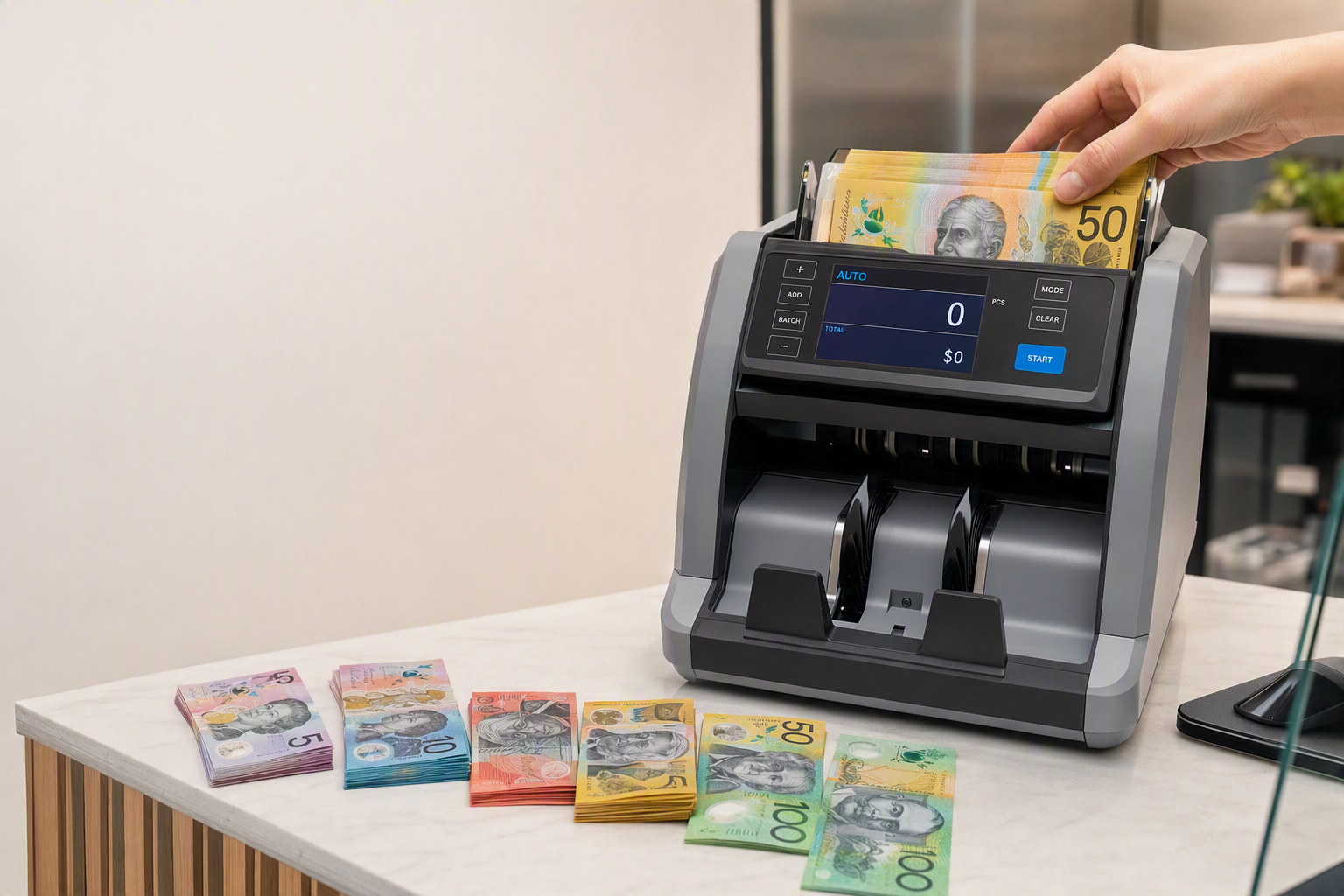
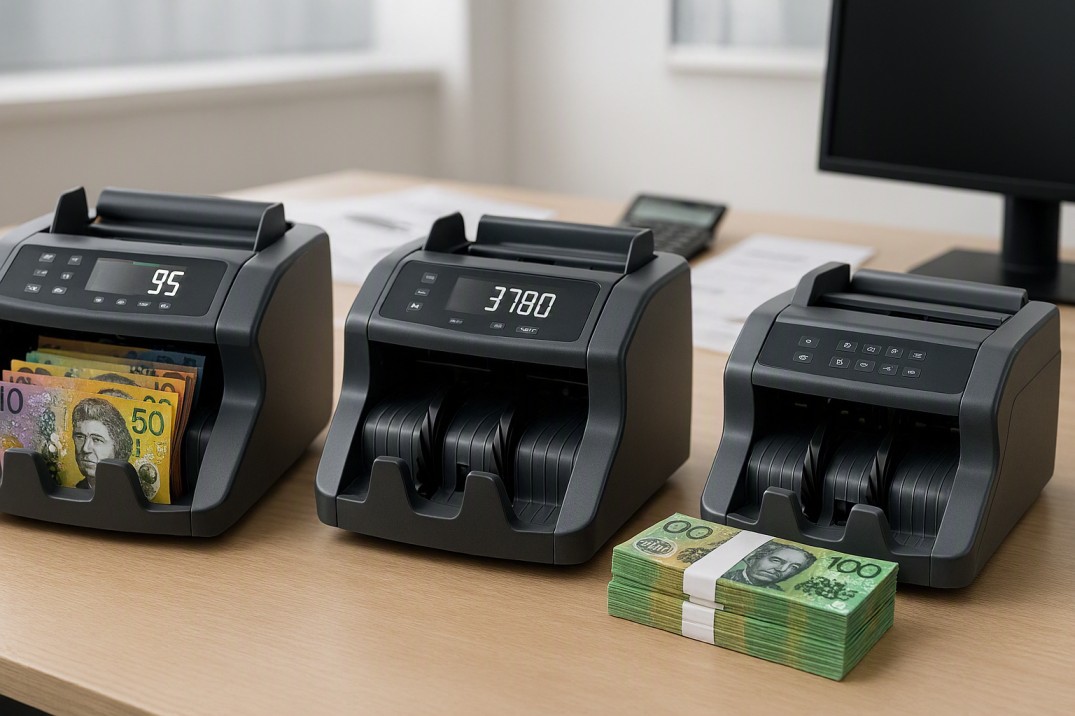
Quick Answer Hopper capacity is the number of notes a cash counting machine can hold in its input tray before you need to reload. Here is how much it...
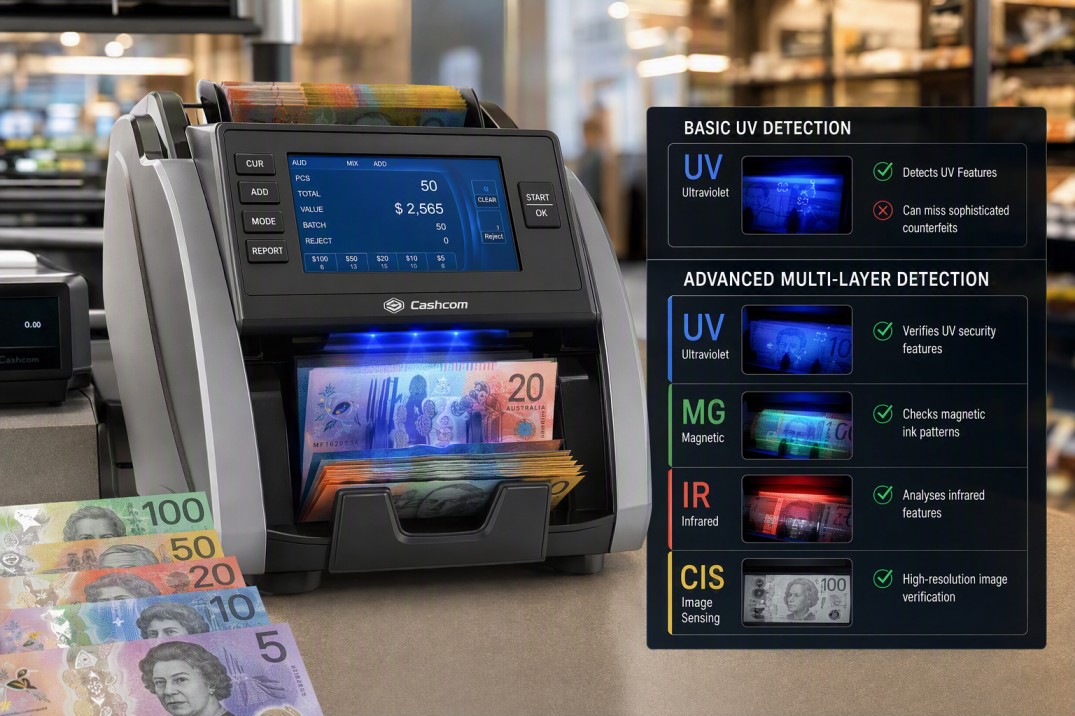
Quick Answer No. UV-only detection is not sufficient for commercial business use in Australia in 2026. UV (ultraviolet) detection was the standard when Australian banknotes were primarily paper-based. Modern...
Quick Answer For most Australian small businesses, choosing a cash counting machine comes down to four questions: • How many notes do you count per day? Under 300: the...
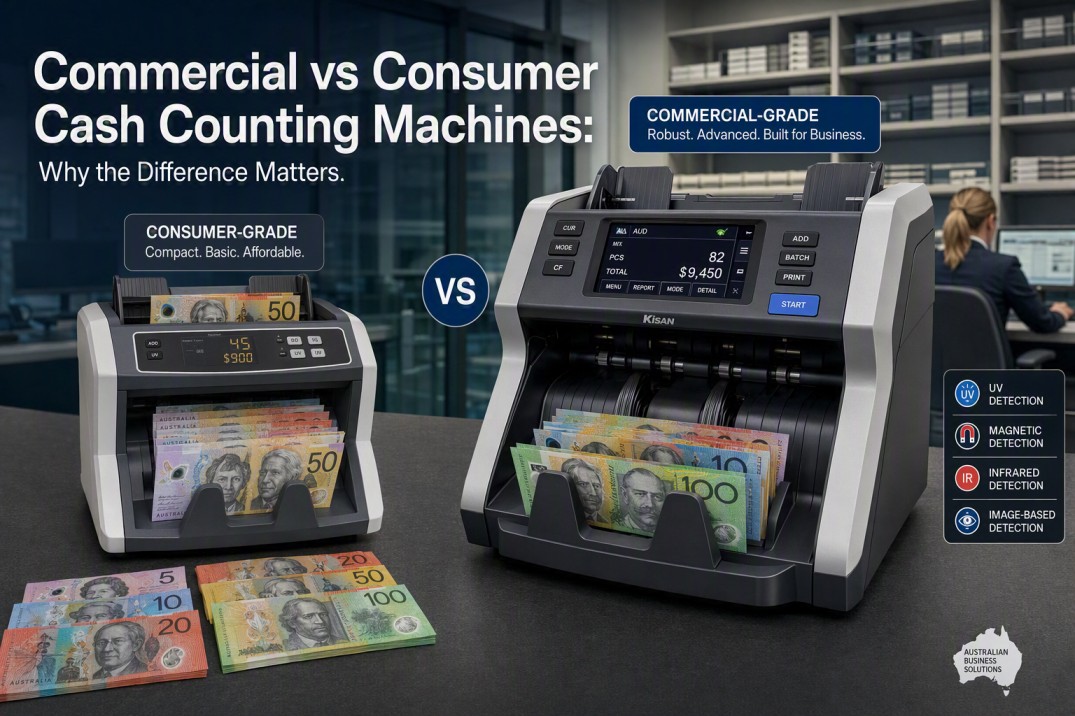
Quick Answer Consumer-grade cash counting machines (typically $30–$100) are designed for occasional, light use — they count notes and check UV. Commercial-grade machines are engineered for daily business use,...
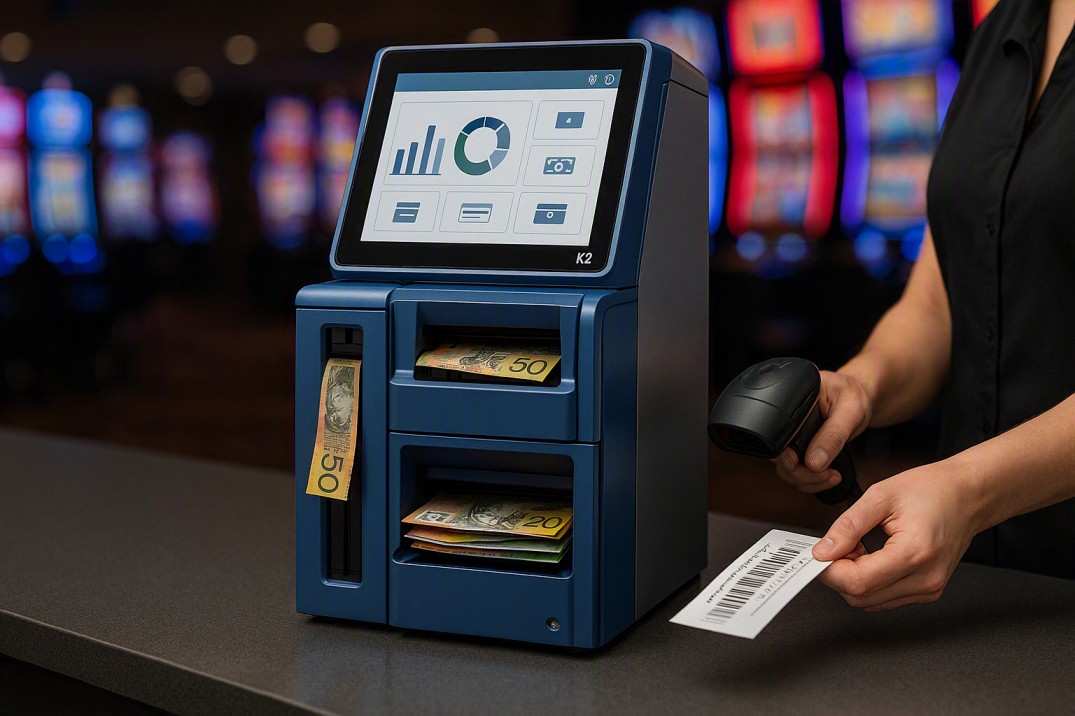
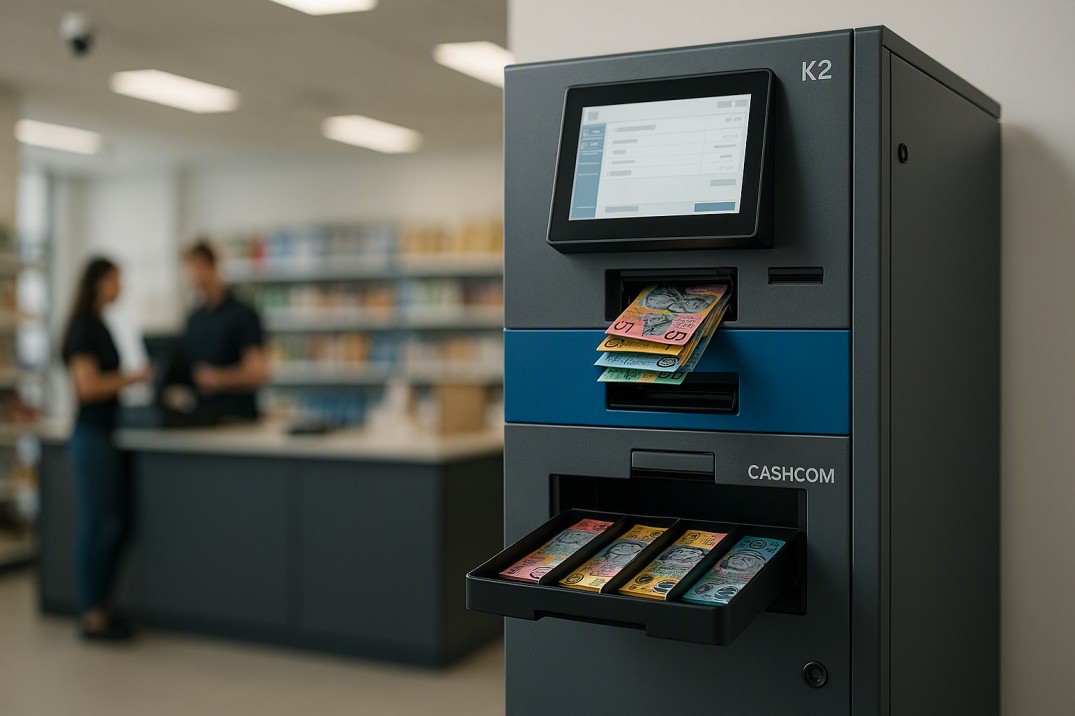
A Note on Terminology Notes recycler, cash recycler, and money recycler all refer to the same equipment category. This guide uses these terms interchangeably. The Cashcom K2 Cash Recycler...
A Note on Terminology Cash recycler, money recycler, and notes recycler all describe the same machine category. This guide uses these terms interchangeably. The Cashcom K2 Cash Recycler is...
A Note on Terminology Cash recycler and money recycler and notes recycler all refer to the same machine category. Likewise, cash counter, money counter, and notes counter are the...
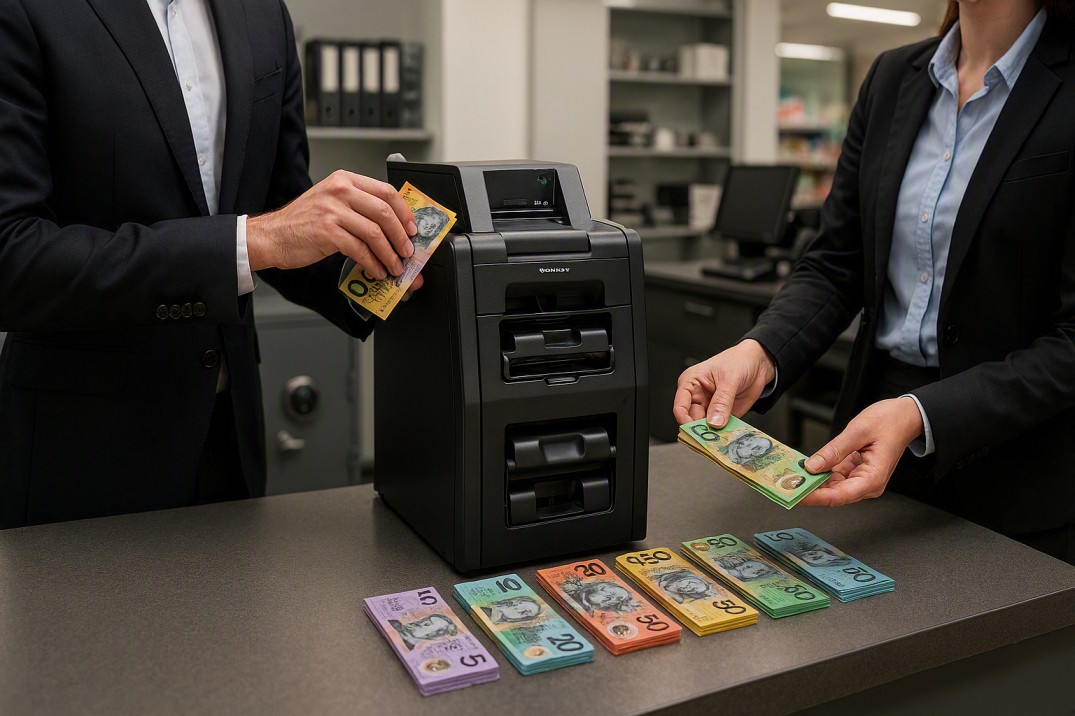
Quick Answer A cash recycler machine automates the most time-consuming parts of retail float management — morning float preparation, mid-shift top-ups, and end-of-day reconciliation — by storing accepted notes...
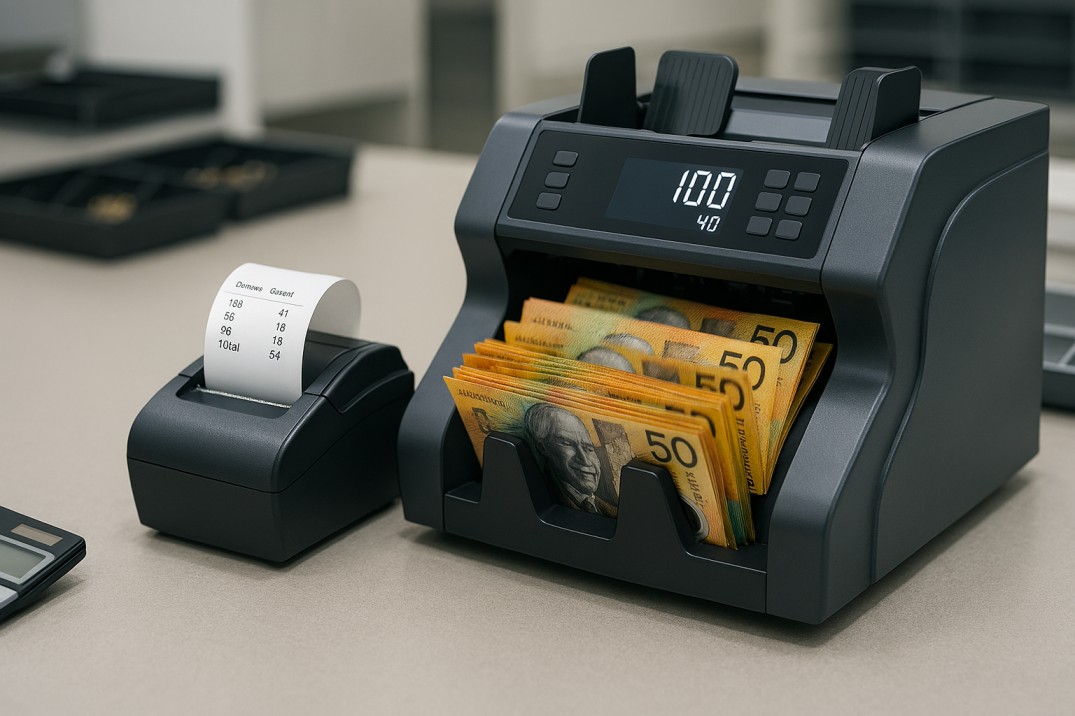
What Does a Receipt Printer Actually Do on a Money Counting Machine? The printer function on a commercial money counter is not a receipt printer in the retail point-of-sale...
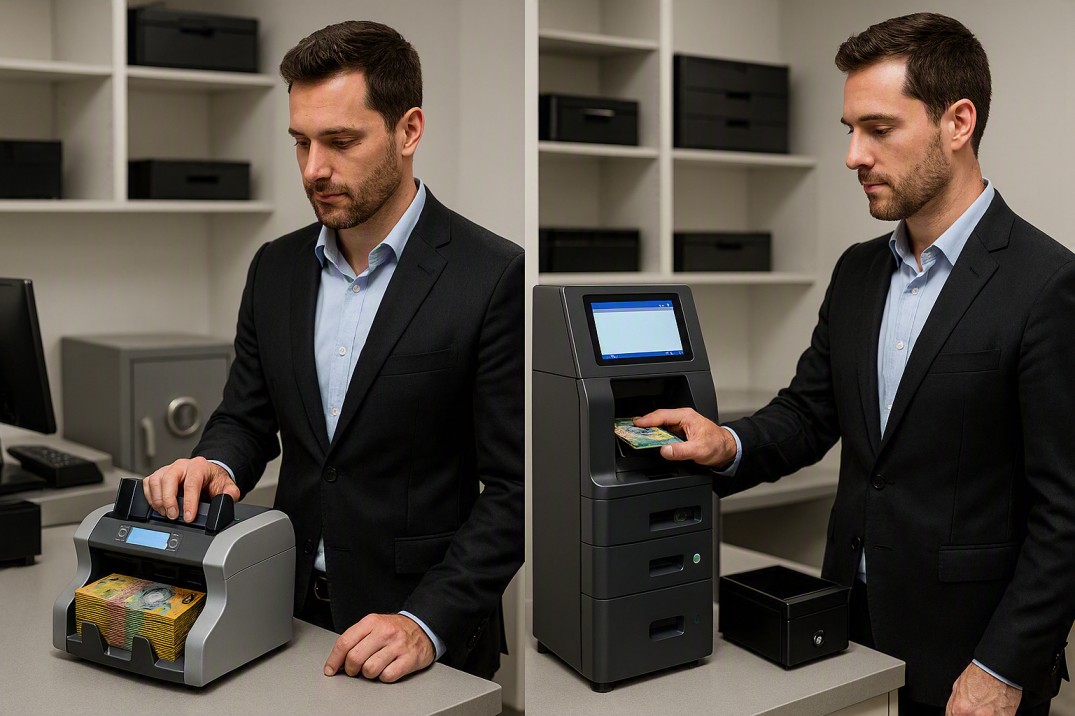
Quick Answer Cash counter, money counter, and notes counter all refer to the same piece of equipment — a machine that counts banknotes and checks them for counterfeits. There...